

Our guest blogger for today, Jitaditya Narzary from Travelling Slacker is an occasional traveler and a photographer par excellence. His travelogues are always comprehensive with loads of detailing and awe inspiring photographs and an FAQ section at the end to help all the prospective backpackers. And this guest post from him is no different. So here goes the article, where he talks about the Valley of Flowers in the Garhwal Himalayas and nearly takes us into paradise...

As for my trip, I have already written my heart out in my travelogue but as Arti asked me to do one here, I think I will try to be more objective and try to be as helpful as possible for the prospective travelers. So I am taking all practical aspects of this trek and discussing them one by one. I hope my first hand experience will help you and I also hope you enjoy these photographs. Most of these images are being published for the first time.
Charting the route:
Keep at least a week in hand for the visit, if possible a couple of days more for a relaxing trip. The best way in my opinion is to reach Delhi first. If you already live in Delhi that’s good for you! From Delhi you will get enough trains and buses to Haridwar or Rishikesh. Haridwar is also worth a visit but if you are running out of time, you can bypass it and move directly to Rishikesh and spend the night there.
The next day, if you have to save your time, you must wake up early and try to reach Joshimath. The distance is around 250 kms but the maximum speed is not more than 30 kmph at any moment of time because of the road conditions. For the same reason, night driving is also not a possibility. This bus ride can be physically exhausting too. If you can spare one more day, I suggest you do a break journey and spend a night in Rudraprayag or Chamoli.
Coming to Joshimath, it is an important point in the Uttarakhand trail from where you can move on towards Badrinath or take the cable car to Auli. It may also be the last place where you will find a functional ATM if you are going to Valley of Flowers. So, I suggest you draw enough cash at that point to save yourself from further trouble. You can either spend the night at Joshimath or quickly move to Govindghat which is around 12 km awayby hiring a car.

Now, the real trek starts at Govindghat. The national highway continues after Govindghat towards Mana Village. But you have to leave the motorable rode and begin the real test of your stamina to Ghangaria. The starting point of the trek also boasts of a small business settlement. There are various shops selling cheap woollens, jackets, caps and other equipment. At this point you will also realize that most of the tourists there are pilgrims heading towards Hemkund Sahib, a Sikh Shrine. To reach both Hemkund and Valley of Flowers you must first travel to Ghangaria from where the road bifurcates towards these two destinations.

Coming to the trek, you must make one major decision. You may try to test your legs but let me warn you that it is very hectic at high altitudes and you’ll have to stop and catch your breath after every 100 metres. If you are an athlete or of otherwise used to physical labour you may enjoy it otherwise it is advisable to hire a horse or a mule. Local men guide the horses as they walk themselves merrily. They make it look easy but trust me it will be very hard for city dwellers from the plains. A one way horse/mule ride charges around Rs. 500 and it takes around 3 hours to reach Ghangaria. There are several shacks selling food and water on this trek so that should not be an issue.


At Ghagaria you will find budget hotels, dormitories and restaurants to spend the night. Wake up early next morning and proceed towards the check point from where you enter the national park. You’ll have buy tickets (Rs. 50/60 per head) there. Now, this final patch is around 4 kms and there is no other mode of transportation allowed here including horses. It is a bit tiring and it may take anything between 2 - 4 hours to cover those 4 kms depending on your physical abilities. Nevertheless, the entire stretch is replete with jaw dropping views, some of which can be seen in the photographs I’ve posted here. Eventually when you reach the place, you’ll get a feeling of salvation, a feeling cannot be described in words. It can only be experienced!


Things to keep in mind:
Time to visit: June to September with July and August being the peak season.
Food: Mostly vegetarian food is available as expected. The best quick meal is a plate of Maggi which is available everywhere.
Clothing: You will not feel any severe cold during summer. But the nights can be cold at such high altitudes. The hotels will provide you blankets but carry some warm clothing of your own.
Budget: The entire region is not costly at all. Food, transportation and accommodation are pretty cheap. I personally rounded up my solo trip in Rs.10-12K.
Accommodation: Budget accommodation is available everywhere. But after Joshimath you are unlikely to find luxury hotels even if you are looking for one. Nevertheless, that must not deter you. After all, these artificial comforts are nothing in compared to what you are going to witness.
Booking: I did not make any prior booking for the entire trip. I believe, I went there before the peak season in June. To be on the safer side, you may talk to the agents in Joshimath regarding stay at Ghangaria, especially if you are traveling with the family.
Others: If you are carrying a camera also keep some plastic bags handy because it can rain at any moment and you must protect your expensive gadgets. Also, power cut is frequent here and so charge your phones and batteries wherever you can.
------------------------*----------------------------*----------------------------*--------------------------
It was the summer of 2010, June to be precise. I finally decided to shrug off all my problems, inhibitions and procrastinations; took a longish leave and set out towards the place that has always had a mythical aura around itself, at least for me. I’d decided to do it all alone because it was not only a trek but a voyage fueled by a desperate need to avoid middle class banality and conformism that plagues most of the world around me. I spent 10 days to and from Mumbai in my pursuit of salvation (I’d not like disclose whether I achieved it or not). With a bit of better planning one can wrap it up within a week.
As for my trip, I have already written my heart out in my travelogue but as Arti asked me to do one here, I think I will try to be more objective and try to be as helpful as possible for the prospective travelers. So I am taking all practical aspects of this trek and discussing them one by one. I hope my first hand experience will help you and I also hope you enjoy these photographs. Most of these images are being published for the first time.
Charting the route:
Keep at least a week in hand for the visit, if possible a couple of days more for a relaxing trip. The best way in my opinion is to reach Delhi first. If you already live in Delhi that’s good for you! From Delhi you will get enough trains and buses to Haridwar or Rishikesh. Haridwar is also worth a visit but if you are running out of time, you can bypass it and move directly to Rishikesh and spend the night there.
The next day, if you have to save your time, you must wake up early and try to reach Joshimath. The distance is around 250 kms but the maximum speed is not more than 30 kmph at any moment of time because of the road conditions. For the same reason, night driving is also not a possibility. This bus ride can be physically exhausting too. If you can spare one more day, I suggest you do a break journey and spend a night in Rudraprayag or Chamoli.
Coming to Joshimath, it is an important point in the Uttarakhand trail from where you can move on towards Badrinath or take the cable car to Auli. It may also be the last place where you will find a functional ATM if you are going to Valley of Flowers. So, I suggest you draw enough cash at that point to save yourself from further trouble. You can either spend the night at Joshimath or quickly move to Govindghat which is around 12 km awayby hiring a car.

Now, the real trek starts at Govindghat. The national highway continues after Govindghat towards Mana Village. But you have to leave the motorable rode and begin the real test of your stamina to Ghangaria. The starting point of the trek also boasts of a small business settlement. There are various shops selling cheap woollens, jackets, caps and other equipment. At this point you will also realize that most of the tourists there are pilgrims heading towards Hemkund Sahib, a Sikh Shrine. To reach both Hemkund and Valley of Flowers you must first travel to Ghangaria from where the road bifurcates towards these two destinations.

Coming to the trek, you must make one major decision. You may try to test your legs but let me warn you that it is very hectic at high altitudes and you’ll have to stop and catch your breath after every 100 metres. If you are an athlete or of otherwise used to physical labour you may enjoy it otherwise it is advisable to hire a horse or a mule. Local men guide the horses as they walk themselves merrily. They make it look easy but trust me it will be very hard for city dwellers from the plains. A one way horse/mule ride charges around Rs. 500 and it takes around 3 hours to reach Ghangaria. There are several shacks selling food and water on this trek so that should not be an issue.


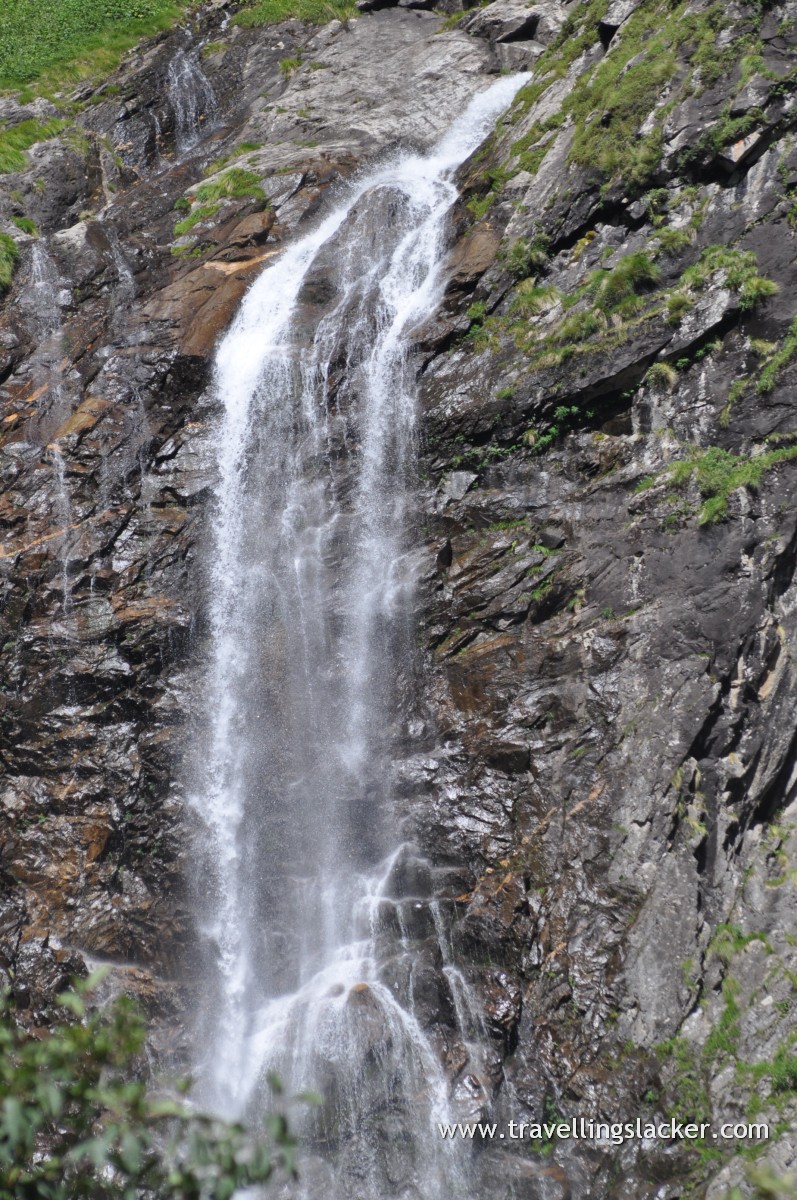
Amazing views enroute
At Ghagaria you will find budget hotels, dormitories and restaurants to spend the night. Wake up early next morning and proceed towards the check point from where you enter the national park. You’ll have buy tickets (Rs. 50/60 per head) there. Now, this final patch is around 4 kms and there is no other mode of transportation allowed here including horses. It is a bit tiring and it may take anything between 2 - 4 hours to cover those 4 kms depending on your physical abilities. Nevertheless, the entire stretch is replete with jaw dropping views, some of which can be seen in the photographs I’ve posted here. Eventually when you reach the place, you’ll get a feeling of salvation, a feeling cannot be described in words. It can only be experienced!


Valley Of Flowers
Things to keep in mind:
Time to visit: June to September with July and August being the peak season.
Food: Mostly vegetarian food is available as expected. The best quick meal is a plate of Maggi which is available everywhere.
Clothing: You will not feel any severe cold during summer. But the nights can be cold at such high altitudes. The hotels will provide you blankets but carry some warm clothing of your own.
Budget: The entire region is not costly at all. Food, transportation and accommodation are pretty cheap. I personally rounded up my solo trip in Rs.10-12K.
Accommodation: Budget accommodation is available everywhere. But after Joshimath you are unlikely to find luxury hotels even if you are looking for one. Nevertheless, that must not deter you. After all, these artificial comforts are nothing in compared to what you are going to witness.
Booking: I did not make any prior booking for the entire trip. I believe, I went there before the peak season in June. To be on the safer side, you may talk to the agents in Joshimath regarding stay at Ghangaria, especially if you are traveling with the family.
Others: If you are carrying a camera also keep some plastic bags handy because it can rain at any moment and you must protect your expensive gadgets. Also, power cut is frequent here and so charge your phones and batteries wherever you can.
Finally :- Be a responsible traveler, do not throw plastic around the area and help the local administration keep the trek clean.
Related Posts -
From Travelling Slacker... Valley Of Flowers: Into No Man's Land
From My Yatra Diary... Treks Beyond Badrinath - Swargarohini, Satopanth Tal, Valley of Flowers, Hemkund Saheb


66 Comments
Sounds so great that trip - would love to go! Happy weekend Arti!
ReplyDeleteEnjoyed reading your journey!
DeleteI am not sure whether you are aware or not but recently there is one more route has opened for Valley of flower trek as per this authentic information http://www.theindia.co.in/travelogues/trek-to-the-valley-of-flowers-and-beyond
Do you think it will have the similar difficulty level of the trek?
Would love to know your views.
Dear Arti
ReplyDeleteEnjoyed reading it. I think I have read more on Valley of flower than any other place.
This guest post idea is very good and a special thanks to the author.
Have a great weekend
ushnishda
breathtaking location and very well summarized post...
ReplyDeletehopefully my wish of going there should realize soon :)
Absolutely fantastic.. Thanks Arti for introducing good bloggers to us..
ReplyDeleteNice to meet Jitaditya, a great guest post, I loved the photographs even if some of those drops left me feeling dizzy.
ReplyDeletelovely pictures and a wonderful writeup... the photos of the flowers looks awesome...
ReplyDeletegreat trip and lovely flowers :)
ReplyDeleteSo much awesome beauty, Arti! Your photos are breathtaking as always! I always look forward to the tours you take us on through your wonderful captures and the very interesting information you include!! Thank you! Hope you have a wonderful weekend!
ReplyDeleteSylvia
Beautiful is an understatement!
ReplyDeleteawesome photos !! thanks for the great info. i hope i can make it one day
ReplyDelete~laura xx
Beautiful post! I remember, that I passed by this lovely destination on way to Badrinath but could not vist!Hope to visit sometimes ...
ReplyDeleteParadise indeed!
ReplyDeleteWhat an amazing place, on that I would love to see for myself.
The flower pictures are so stunning! I also like the low clouds!
ReplyDeleteWhat a nice place to walk around. Especially I'm interested in some kinds of flowers.
ReplyDeleteThey are so beautiful and unique.
Hi,Arti.
ReplyDeleteIt looks very great place to trek with a back pack and camera though I am not good at climbing......
The blue sky, white cloud, mountains and green valley are captivating!
I enlarged your photos enjoying trekking with you.
Have a good day.
Tomoko
one of the beautiful place of uttarakhand. even i visit badrinath 3 times but never got a opportunity to visit this "heaven on earth"
ReplyDeletehope will go this year..
What a beautiful place and enjoyed seeing all the wonderful photos. The valley of flowers is so pretty .
ReplyDeleteThanks for all the wonderful advice. One day I hope to maybe get the chance to visit this fabulous part of the world.
Happy weekend
Hugs
Carolyn
Wow , nice pictures .
ReplyDeleteWow - the air is so pure up there. Wonderful shots and words.
ReplyDeleteGreat pictures. The valley seems to afford an opportunity to be closest to nature. Salvation being subjective.
ReplyDeleteThe mountain green is very beautiful and marvelous pictures. I want to go there but I am weak at the high place thin air. So thank you for sharing.
ReplyDeleteHave a nice weekend!
Fantastic pics. Difficult to take eyes off them..thanks Jitaditya and Arti
ReplyDeleteThanks for sharing and bringing back those lovely memories. Must really look for those old photos stashed somewhere!
ReplyDeleteFantastic pics Jitaditya :) Amazing level of depth in every pic!! You travel guys (Arti included) makes the travelogue (and travel blogs) worth visiting!! :)
ReplyDeleteI like backpacking and trekking trips. I have been to Haridawar and Rishikesh but didn’t know about this place. :(
ReplyDeleteGreat post and well detailed.
Love
http://www.meghasarin.blogspot.com
lovely flowers
ReplyDeletegreat journey
Truly exciting trip. Wonderfully scenic images.
ReplyDeleteA delightful post from Narzary .Great narration and wonderful images .Thanks for sharing.I wish to visit valley of flower someday .
ReplyDeletevery informative. thank you.
ReplyDeleteWhat a fabulous place to visit!
ReplyDeleteyes it is .....and you know that the valley changes color every fortnight ......
DeleteAwesome!!! It's one of my dream destinations... a heaven on earth!!! I could experience the place at least virtually by this post and the lovely pics. A great post as always :)
ReplyDeleteBreathtakingly beautifuL!
ReplyDelete@Arti @Jitaditya Narzary Just read the Awesome post.Beautiful photographs.Thanks a lot.
ReplyDeleteSuper cool.Sounds like an awesome trip!! I totally love those flower shots!! :)
ReplyDeleteIt would indeed be an adventurous journey, can make out from such beautiful pics :-)
ReplyDeletenice travelogue with photos
ReplyDeleteplease convey my thanks to Jitaditya Narzary
Thanks Arti for this guest post.Its really informative.Valley of Flowers is in my list since a long time, hope to see it soon:)
ReplyDeleteBeautiful ! Is this the place where the skeletons of an army was found ?
ReplyDeleteLovely guest post jetaditya....I love to visit that valley of flowers.....beautiful pics. ...thanks for sharing.
ReplyDeleteWish this cool post had come my way some three months from now when we would be melting in scorching sun!
ReplyDeleteI had been to this heavenly place myself(right upto Mana) and the wonderful memories came alive with Jitaditya's vivid pics and description. Thanx Arti!!
amitaag.blogspot.com
woow .. not sure whether ive been to this place when i was young but if not, i would love to visit this place once in my lifetime for sure !!!
ReplyDeletethanks for sharing this post Arti !
regards
rahul
Lovely pics and excellent write-up. I recalled the few days I spent in the region about five years back.
ReplyDeleteI make a plan back to india next year, and my destination will be Rishikesh and Haridhwar, if you have any information about how if i go from amritsar - dharmasala than heading to Rishikesh - Haridwar and finish in Delhi it is posible?
ReplyDeleteAwesome. I'm dreaming of this place now just by reading this very informative post and looking at the wonderful photographs. :)
ReplyDeleteWonderful write up Arti!
ReplyDeleteQuite inspiring :)
Your blog is becoming a wonderful travel guide with all of your guest posters! I wish I could take advantage of all the expertise. Since I can't, I am certainly enjoying the virtual travels. Thanks Arti!
ReplyDeleteone of my favourite places to go to...again and again. Great photos.
ReplyDeleteAmazing photographs, a delight :)
ReplyDeleteDelightful photos and narration..as usual, Arti..!
ReplyDeleteI really enjoyed this virtual trek, going through mist-hung gorge, lush greens, refreshing fall, and majestic rocks under the blue sky. Each and every flower blooming at the Valley of Flowers is so beautiful. This is a heaven on the earth.
ReplyDeleteYoko
Thanks Jitaditya. The pics are amazingly beautiful, the narration is incredible. Trips like these are truly enchanting, energizing and elevating & enlightening. I am sure you found salvation !
ReplyDeleteHey Arti,
ReplyDeleteA very delightful post and photos. Wish to go there someday :-)
Have a lovely week ahead :-)
Breathtaking locales and lovely photography! :) Thanks for this precise and informative post, Jitaditya. :):)
ReplyDeleteLovely photos of the valley flowers, Arti. They brightened my morning. :)
ReplyDeleteMy first time here. This was wonderful. Brilliant write-up.
ReplyDeleteRegards
TG
Oh, definitely this is the paradise! Especially when I saw the photo of the valley with a summit being clouded, I asked myself "Is this Shangri-La, somewhere in the Himalayas?" What an exciting introduction of the place like this!! Photos are stunning!
ReplyDeleteArti, thanks a lot.
keiko
Nice and interesting description
ReplyDeletewith beautiful photographs.
Thoroughly enjoyed.
Thanks to you Arti for sharing this
post with us and thanks to your
respected guest blogger.
I think a trip to the valley of flowers makes for adventure and becoming one with nature! Lovely photographs!
ReplyDeleteAs aptly said by one of the followers of this blog, this is by far the most detailed description of the valley of flowers. One of my friends is visiting this place and this post will help him a lot. Great shots as well, especially the 8th one from top is the best of the lot.
ReplyDeleteI have the same set of pictures from my 4 or 5 trips to this wonderful site.....
ReplyDeleteNice description ......
ReplyDeletehttp://swapneelbestpicnicspot.blogspot.in/2015/04/day-1-valley-of-flowers-garhwal-land-of.html
The Valley of Flowers in July is carpeted by a wide range of flowers and many exotic ones too; Wild roses, blue corydalis, saxifrage, geraniums to name a few.
ReplyDeleteAwesome!!! This place was very beautiful and this is my dreamland....
ReplyDeleteThis comment has been removed by a blog administrator.
ReplyDeleteDelighted you stopped by... Your suggestions, feedback are really appreciated. Thanks a lot :) Hope you visit again!
If you have asked a question, please give me at least 2 days to reply back. Thank you :)