

“Gifts are great, the founding of temples is meritorious, meditation and religious exercises will pacify the heart, comprehension of the truth leads to Nirvana - but greater than all is Loving–Kindness –- Gautam Buddha”
Very early in his life, Prince Siddhartha Gautam had left his house in search of the divine truth. This truth he sought was revealed to him under the Bodhi (Peepal) tree in Bodh Gaya, Bihar and he became the ' Enlightened One ' - Gautam Buddha. His only aim now was to improve the quality of human life. With this wish in mind, he reached Sarnath and delivered his first sermon after Enlightenment and set in motion, The Wheel of Law (Dharmachakra Pravartan). He gave the world the noble Eightfold Path- a way to achieve the ultimate goal of salvation or Nirvana. Thus, Sarnath became one of the four important Buddhist Pilgrimages around the world- others being Lumbini (birthplace), Bodh Gaya (enlightenment) and Kushinagar (death).

Around 10 kms from Varanasi, one can reach Sarnath by hiring taxis, autos that are easily available all over the city. A large number of guides (their charges are fixed at Rs. 20) roam around the place looking for customers and are a good option if one is not aware of the significance or the detailed history of the place. We hired one and entered the premises of the serene Buddha Tirtha.
Sarnath has witnessed demolition, first by various Muslim invaders and later by treasure seekers, a number of times. Yet, even the ruins continue to provide fascinating links with the glorious past. These ruins and remains including various precious Buddhist artifacts and the royal Ashokan Pillar having the symbol of four back-to-back lions (Indian national emblem) are all very well preserved in an archaeological museum in Sarnath.
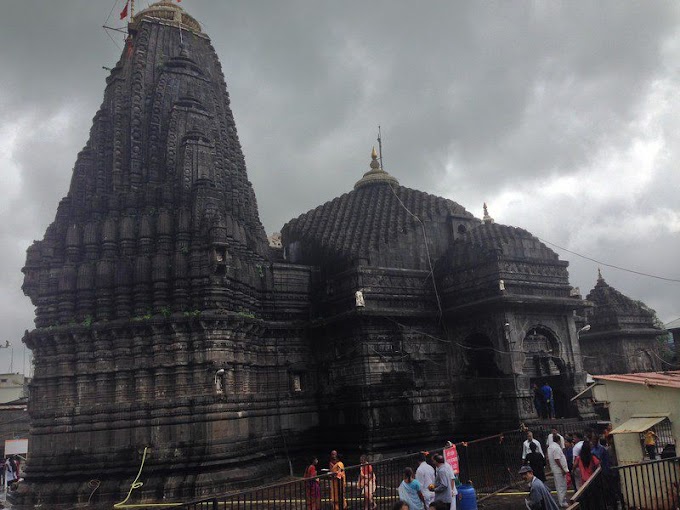
First, our guide took us to the Dhamekh Stupa, a 34 mtr high stupa, believed to be the exact spot where Lord Buddha delivered his first sermon. A solid stone structure covered with beautiful floral and geometrical patterns, the stupa was built by Mauryan Emperor Ashoka and is one of the finest monuments here.

We were told that it dates back around 500 A.D. but has been rebuilt a number of times since then. Our guide also mentioned of a second stupa, Dharmarajika stupa, but this he said was reduced to rubble by 19th century treasure seekers.

We then moved towards a relatively modern Maha Bodhi Society temple, Mulagandha Kuti Vihara, built by the Sri Lankan Buddhist monk - Angarika Dharmapala. The temple stands amidst vast green lawns and is flanked by beautiful sayings by Gautam Buddha. Do take time out to read these inspirational quotes because the peace that emanates even from them is amazing.

As I entered the temple, I was surprised to notice that despite the steady stream of devotees trickling in, there was an air of stillness that enveloped this temple, something that we often associate with the Buddha himself.

There is nothing elaborately intricate in the architecture of the temple. Its beauty lies more in its simplicity rather than any sophisticated decoration. The interiors are dimly lit with a series of paintings by Japanese painter - Kosetsu Nosu, depicting incidences from life of Buddha lining the walls.

In the heart of the temple is a life-size statue of Lord Buddha covered in gold besides which is a silver casket containing his tooth relic. Since photography is allowed inside, I could click some photos to share them with all of you.

Closeby is the Bodhi tree (grown from a sapling brought from Sri Lanka which in turn was grown from a sapling of the original Bodhi tree in Bihar) below which are life- size statues of Gautam Buddha giving his sermon to the five BoddhiSattvas. One can also read the entire sermon which is engraved on black stone around the Bodhi tree in different languages.

is giving his sermon to his first five disciples ]
When I reached there, Some Buddhists were chanting mantras with beads in their hands while some others were lighting candles. I closed my eyes... it seemed as if time had ceased to move forward... After their chantings came to an end, we all circumambulated the tree. While doing so, I picked up a fallen leaf, still tucked away in one of my books. One incredible fact, our guide told us about this tree, is that it can flourish in any type of soil in any weather conditions! Amazing!!!
Next, we proceeded towards the open deer park. Our guide informed us that Sarnath has actually derived its name from 'Saranganath' which means 'Lord of the Deer'.

[ Deer Park ]
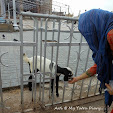
A story goes that Buddha - a deer in his previous birth as a BoddhiSattva - had offered his own life in place of a doe which a king intended to kill. Moved by this gesture, the king built a deer park which stands even today in Sarnath. If you feel like feeding them with something, buy a packet of carrots sold in the premises.
According to our guide, the modern temples in the Thai, Chinese, Tibetan, Burmese and Japanese monasteries are also worth a visit. But unfortunately we were unable to visit these due to lack of time.
This marked the end of my journey to the Land of The Blessed One - Gautam Buddha - who inspired one to strive for the higher values of life by exercising virtuous conduct and improving the quality of one's thought. He taught us a way of life, a way to rise above the troubles of life and finally a way to achieve the ultimate happiness of Nirvana. In today’s turbulent world, I would say Sarnath is not just a place of worship but a haven of peace. In a society where terrorism has cast its black shadows and people are fighting in the name of religion, his principles and words of wisdom provide us with much food for thought. Really, a life that to so many of us today has lost any true relevance can once more be rejuvenated by the practice of his ideals.


44 Comments
wd like to add u as friend...
ReplyDeletecan i
Wow, thanks for the free tour. Great post.
ReplyDeleteThank you Arti for sharing your beautiful pictures and the history -- and philosophy -- lessons! What a serene place to visit. I would love to see it.
ReplyDeleteSeems like a wonderful place,would love to visit there atleast once...lovely post arti
ReplyDeleteWhat an interesting place to see. Great architecture and art. I enjoyed the tour of the place thru your lens.
ReplyDelete@dipu-Definately u can follow my blog..Hope u like it..Thanks.Keep coming.
ReplyDeleteI will visit these places someday! Thanks for all the information!!
ReplyDeleteFascinating post, I love the picture with the Bodhi tree !
ReplyDeleteWhat a readable, interesting and educating post & well documented too - great pics . what an architecture.
ReplyDeleteVery exotic to a Norwegian you know - thanks for sharing.
Wow !! What an in-depth article !!
ReplyDeleteWas a great read .
Thanks for you comment on "Pipe Dreams ... A Sedoka" .
Hope you will stop by again :)
A wonderful post Arti. These are fantastic shots of these beautiful places. I love the history behind all of them.
ReplyDeleteWonderful shots! Thanks for sharing such a beautiful place with us!
ReplyDeleteThat stupa is absolutely amazing! I think I've seen it in the fantastic BBC documentaries 'The Story of India', but can't be quite sure... Wonderful post!
ReplyDeleteI already visit one blog like this and can't get enough of my journeys with this particular blogger (Chitra) so I am delighted to find you. I look forward to our travels together and thank you for visiting me over at Pen And Paper, it was lovely to meet you.
ReplyDeleteI enjoyed this post very much! Thank you for the photos and the words.
ReplyDeletevery beautiful virtual trip. thanks for shared
ReplyDeleteThis is my favorite of your tours so far. Lovely words and pictures. Very inspiring.
ReplyDeleteAwesome pics Arti..tx for the tour!!
ReplyDelete@Deb
ReplyDeleteYes definitely..U should visit India once to see the lovely heritage and cultural sites.
What a fantastic place, Arti! I enjoy so much these very fine pictures and the interesting text! Thanks for sharing!
ReplyDeleteWhat a grand place!
ReplyDeleteGreat write up and pics too. :)
stunning stupa and beautiful temple..... and didnt know it's a deer park there ya
ReplyDeleteThanks for the virtual tour! The information you provide is quite interesting!
ReplyDeleteFascinating post! I especially enjoyed seeing the lovely deer. Thanks for stopping by Willow Manor. Hope to see you again soon.
ReplyDeleteAmazing pictures and a wonderful account of the place.
ReplyDeleteVisiting from BPOTW. I know very little about the history of Buddha, this was quite interesting.
ReplyDeleteHi there.. the second temple looks so old and neat! Have a great weekend,
ReplyDeleteAloha-
Regina
Very beautiful post with so many interesting information.
ReplyDeleteHello there, this is a wonderful post! I missed going to Lumbini when I was in Nepal many years back. My goal is to go to Sarnath and Bodhgaya someday. Thank you so much for sharing.
ReplyDelete@Everybody Thanks for your wonderful comments. Glad you liked this post.. Hope you all visit again!
ReplyDelete@Fufu the deer park is where Lord Buddha gave his sermon
@radha Thanks.. Sarnath is a very quiet and a tranquil place something which is very rare to find in the hindu temples of our country.
ReplyDelete@Kilauea Poetry..The second pic is not a temple!!it is a memorial built in solid stone where Lord Buddha gave his first sermon.
What a beautiful, spiritual journey. Lovely photos. Thank you for your visit as well.
ReplyDeleteFASCINATING India......I've been there; but only in Bombay.....(for work) many times and wished always to have time and travel around in India.....I'll do it now on your wonderful blog!!!!!!
ReplyDeleteciao ciao and thanks for stepping in my Tuscany!
elvira
@Elvira Hope you get to visit the holy places of India..They are so beautiful and fascinating indeed!!Glad u liked my space..do keep coming!
ReplyDeleteVery informative with beautiful pics! Thank you!
ReplyDeleteThanks for visiting my blog and nice comment. You have a nice blog. Congrats.
ReplyDeletethat was beautiful and inspiring. :) discovered you from WOW's writers forum (which I'm new too and really enjoying)
ReplyDeleteGreat post. Love the pictures and love hearing about your belief.
ReplyDeleteThanks
excellent photographs and thanks for all the great information! It was splendid
ReplyDeleteCame across your post which brought back lot of memories. In one of my trips to India, about 15 yrs back, I decided to visit Paryag and Varanasi. Finding Sarnath located so close to the city of Varanasi was serendipity and I went there twice. It was so peaceful there, except for a silk clothing salesman who would not let go of me until I visited his loom nearby. There were no tour guides hanging around back then and it was all do it yourself kinda thing. The ruins of the nearby monastery, where I am sure multitudes of monks got their training at one time was quite interesting. Thanks for your post and the pictures. Keep up the good work!
ReplyDeleteVery informative with beautiful pics! Thank you!
ReplyDeletei also like to share one others resource
<a href="http://varanasitourism.com> Varanasi Tourism</a>
Fantastic...!
ReplyDeleteArti,
ReplyDeleteThanks a lot for letting me know this blog! Beautiful! Do you know how I was surprised when I knew the meaning of Sarnath!! Deer! And also a replica of Ashokan Pillar is Todai-ji temple in Nara. Now I feel very familiar with Sarnath. But so sorry it has sad history too. I will come back as I want to read more.
keiko
Great Post. I am looking forward to go to Sarnath soon. I blog here: http://www.urbanrabbit.in/
ReplyDeleteYour comment would be appreciated!
Delighted you stopped by... Your suggestions, feedback are really appreciated. Thanks a lot :) Hope you visit again!
If you have asked a question, please give me at least 2 days to reply back. Thank you :)